Canada · December 2014 – April 2015
The Cross Canada
Expedition
Ben and Natalia crossed Canada from south to north, in winter: from the US border just south of Winnipeg, cycling up through Manitoba to Gillam, where the roads ran out — then on skis, pulling sleds of around 100 kg, through the forest to Churchill and up the Hudson Bay coast to Baker Lake.
RouteUS border → Gillam by bike · Gillam → Churchill → Arviat → Rankin Inlet → Baker Lake on skis
WhenMid-December 2014 to the end of April 2015
TeamBen and Natalia
SledsAround 100 kg each — food, gas, clothes and equipment

300KM
On skis through the boreal forest to Churchill
700KM
Across the sea ice and tundra to Rankin Inlet
−50°C
And below, at times
160DAYS
Of supplies organised for the journey
The story
Plenty of highs and lows
The ride north
Before cycling north through Manitoba in the middle of the Canadian winter, an enormous amount of preparation was needed for the journey ahead. Over 160 days of supplies had to be organised; supplies that would be sent to several staging points along the route to enable them to complete the journey. Once everything was in place, the two set out on their bikes from the US border south of Winnipeg, just a few days before Christmas. From there, they cycled north to Gillam, where the roads ran out and where they switched to skis…
Cycling through the Canadian winter is no easy feat. While the highway through the province is good, temperatures in Manitoba go down to below -50C, and the winds can be tough. You need thicker tyres because of the ice (fortunately we didn’t need to use our studded tyres), and your bikes are so much heavier because of all the supplies and equipment you need to carry – especially with the distances between towns.


The winter we did this, it actually started off quite mild – only around -2 or so for the first week, with very little snow; which was actually a bit of a worry as we would need to melt snow every night to be able to eat at night and at breakfast in the tent, and keep hydrated during each day. It soon got colder though, and the snow duly appeared.

We will always have so many fond memories of this part of the journey. While we largely travelled along a highway through the forest, so not much of a view, we experienced so much, from seeing a pack of wolves in the distance and then… just so many incredible people who we met along the road, who would offer us drinks (hot chocolate was so nice to have as we went along our way!) and chat to us – I don’t think anybody had ever seen anyone crazy enough really to be doing anything like this!
Special thoughts go out to the Price family who invited us to stay Christmas with them – absolutely amazing! And of course, Jerry in Woodlands – amazing guy! Lorne and his incredible musical instruments made from… anything really! We miss you!


On to thin ice
The second part of the expedition, after leaving the bikes behind and switching to skis, began near Gillam. From there they skied 300 km through boreal forest to Churchill – the polar bear capital of Canada – and then headed out on to the Hudson Bay to cross the sea ice and coastal tundra up to Rankin Inlet, around 700 km away, and on to Baker Lake. Temperatures went down to below -50C at times, and Ben got frostbite on his two thumbs and a finger half way through, just to make life more complicated… but they made it!
Looking back at this ski journey and there were plenty of highs and lows. We perhaps underestimated a lot of the challenges ahead of us, and over-estimated the distances we would be able to travel, and it could be frightening at times when we thought about how we were so far away from everybody we knew and indeed, any local community. At the same time, just being by ourselves, working towards our goal in the north of Canada, the variations in the terrain, the wildlife… everything just made it so exciting with different challenges every day.
It started off tough: we followed power lines that cut through the forest (simple huh? At least we couldn’t get lost…). The problem with that was that the snow accumulated in the gap, and pulling sleds that weighed 80kg each through that snow, with so much resistance… That was hard and progress was half of what we wanted, often only managing 5km or so in a day, which was discouraging.


When we got to Churchill, we were able to rest and take stock (and also mend our sleds, which had got damaged), before heading out on to the ice and north. From then on, progress was mixed – the ice at first was varied: some of it was very smooth, so we could go pretty quickly, but then we would get rough ice caused by the tidal pressures pushing the ice to the coast, with huge fields of this rough ice to navigate. We would often have to travel a few hundred metres with one sled before going back to get the other as they were so heavy to pull over these walls of ice. Then there was the thin ice, that we encountered once as we got very close to open water – scary as the ski pole went in almost straight away when poking into the ice, which provided an immediate sign that we needed to retrace our steps a little…

So many highlights to remember! Meeting Inuit hunters on the ice; seeing Caribou on the tundra and even arctic hares… One time that stands out was when we arrived in Arviat, just in time for Natalia’s birthday – we had 15km to go in the day and the conditions were terrible with strong headwinds blowing snow into our faces – it was so nice eventually arriving there and staying at a guest house; having a shower after almost 40 days!! After a couple of days rest, we left and headed up to a tiny community called Whale Cove. Visibility was good when we arrived, and people could see us coming for miles, and when we got there, it felt like the entire community had come out to greet us!


Photos · 2014–15
The Cross Canada Expedition in pictures


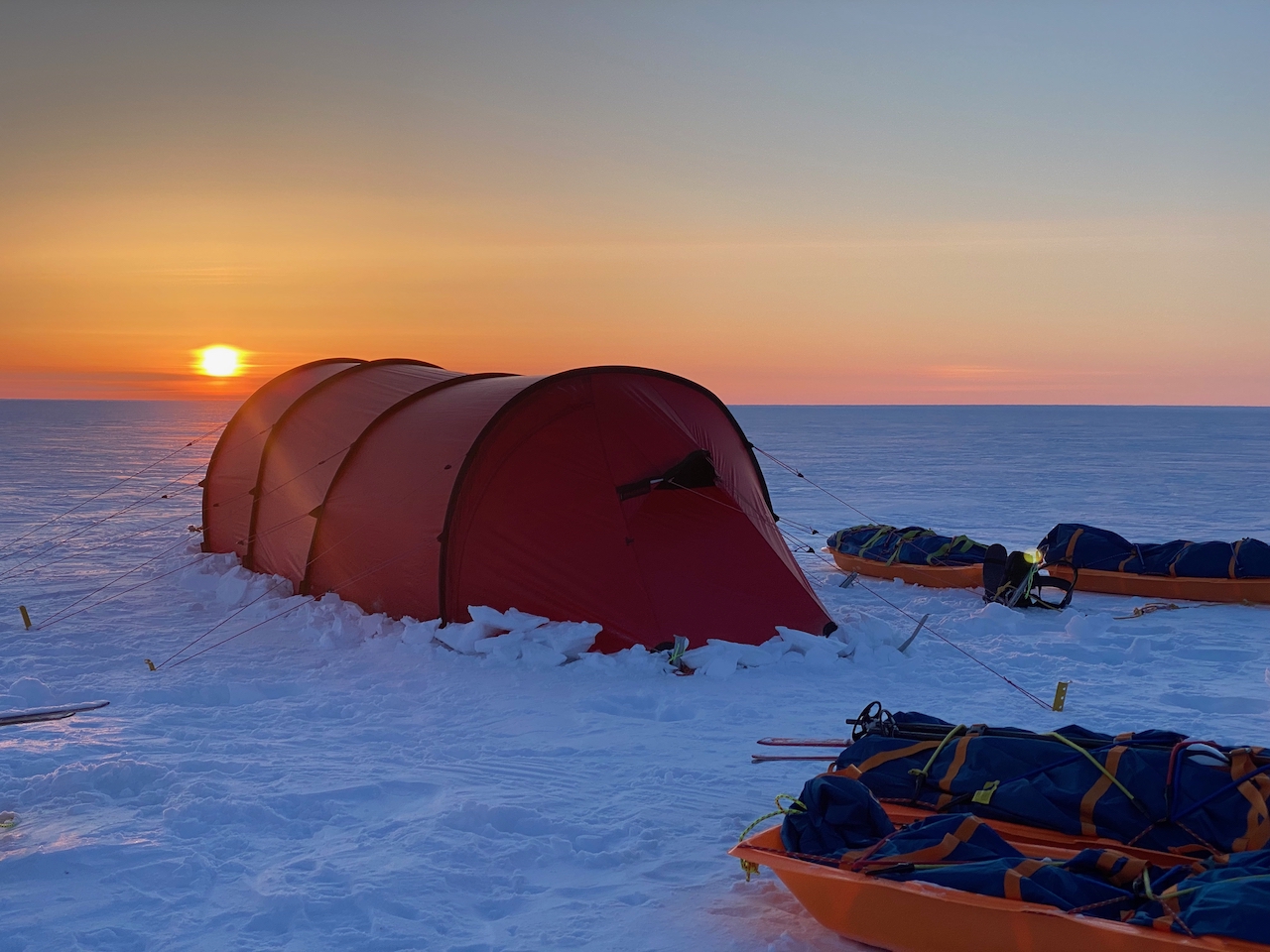
Next expedition · April 2022
The Greenland Crossing
560 km east to west across the Greenland ice sheet with the Hvitserk team — 80 kg sleds, temperatures down to −40 °C, and the abandoned radar station at DYE-2 on the way.